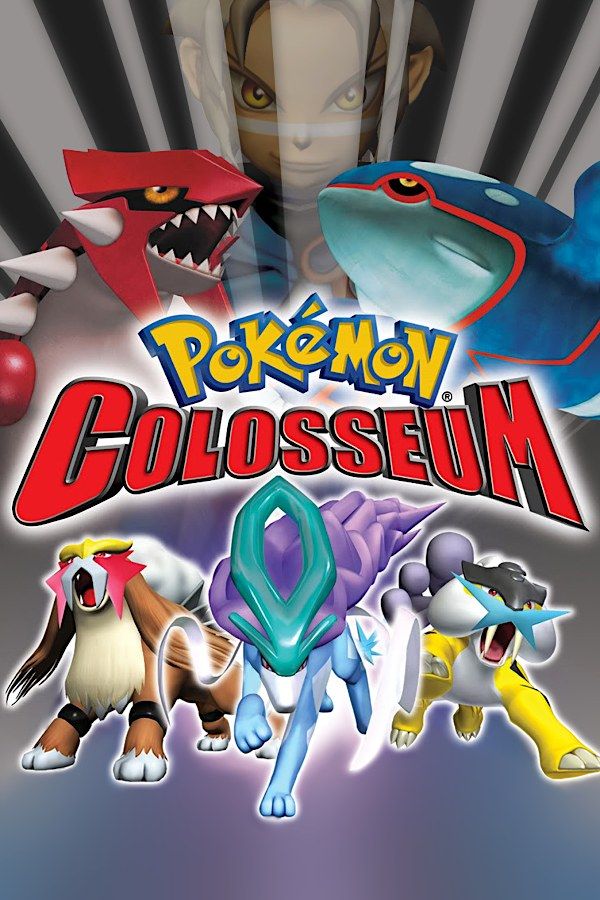
Genius Sonority’s 2003 Pokémon RPG for the GameCube has no wild Pokémon to catch. You play Wes, a former member of Team Snagem, who steals its Snag Machine to take Shadow Pokémon from trainers across the Orre region and purify them. Every trainer battle in the story is a double battle. If you own the game, Nagori lets you play it on iPhone and iPad.
What you need
- An iPhone 12 or newer, or an iPad with an A14 chip or newer, with iOS 17.6 or later.
- Nagori from the App Store. Your first game is free.
- A disc image of your copy of Pokémon Colosseum:
.iso,.gcm,.rvz,.cisoor.gcz, or a.zipor.rarcontaining it. The game fits on a single disc.
No BIOS file is needed.
How to play Pokémon Colosseum on iPhone
- Install Nagori from the App Store.
- Copy your Colosseum disc image to the Files app, in iCloud Drive or On My iPhone.
- Open Nagori, tap + and select the file. Add GameCube games from inside Nagori: the Files app’s Open in menu doesn’t hand formats like
.rvzand.gcmto Nagori. - Find Pokémon Colosseum on the GameCube shelf and press Play.
- Switch to a touch layout with a stick. The default Standard layout has none, and Wes walks around Orre with the control stick. Pause, open Settings → Touch Layout and choose D-Pad + Stick. With a controller connected, you can skip this step.
Controls
Outside battle, you steer Wes with the control stick, talk with A and back out with B. Battles are turn-based, with a move to choose for each of your two Pokémon, so touch controls work well. A and B get most of the presses: open Edit Layout in the pause menu, make them bigger and drag them under your right thumb.
With a controller, A is the bottom face button, B the left one, X the right one and Y the top one. Z is on the right shoulder button, and L and R are the triggers. Press the left stick to open Nagori’s pause menu.
Saves: memory card and save states
Colosseum writes your progress to the memory card when you save in the game. That card works in Nagori as it did on the console. It stays inside the app, though: it isn’t in the Files app, isn’t part of Export Saves and doesn’t sync to iCloud.
Nagori adds two things on top:
- Quit any time. Leave the app mid-battle and Continue puts you back on the same turn.
- Save states. Pause and choose Save, then Load to go back. Nagori keeps your last four per game.
Save in the game as well: a save state may not load after some Nagori updates, while the memory card save stays.
Snagging Shadow Pokémon with save states
Every Shadow Pokémon belongs to a trainer, and you snag it by throwing a Poké Ball at it during the battle. Rui, who travels with Wes, points out which of the opponent’s Pokémon are Shadow Pokémon. Weaken it first, but carefully: a Pokémon that faints can’t be caught. Pause and choose Save before the battle, and if it faints, choose Load and fight again.
Purifying a snagged Pokémon takes time. Keep it in your party and battle with it, then finish the job at the Relic Stone in Agate Village.
What needs a Game Boy Advance
Colosseum connects to the Game Boy Advance Pokémon games through the GameCube–Game Boy Advance link cable. Nagori plays GameCube games with one player and has no link support, so you can’t:
- trade Pokémon with Ruby, Sapphire, FireRed, LeafGreen or Emerald,
- bring a Game Boy Advance team into Battle Mode,
- battle friends on the same iPhone or iPad.
Nagori plays those Game Boy Advance games too, but it can’t connect them to Colosseum. The Story Mode is single-player and needs neither.
Best settings
Open the pause menu and go to Settings → Quality. GameCube games work an iPhone hard, and this setting trades frame rate for heat:
- Low keeps the device coolest, at a lower frame rate.
- Medium, the default, is the place to start.
- High gives the smoothest motion and is meant for the newest iPhones and iPads.
Battles are turn-based, so stay on Medium and drop to Low if your device warms up over a long session. Nagori shows GameCube games at their original resolution, and Full Screen stretches the picture to fill the display.